
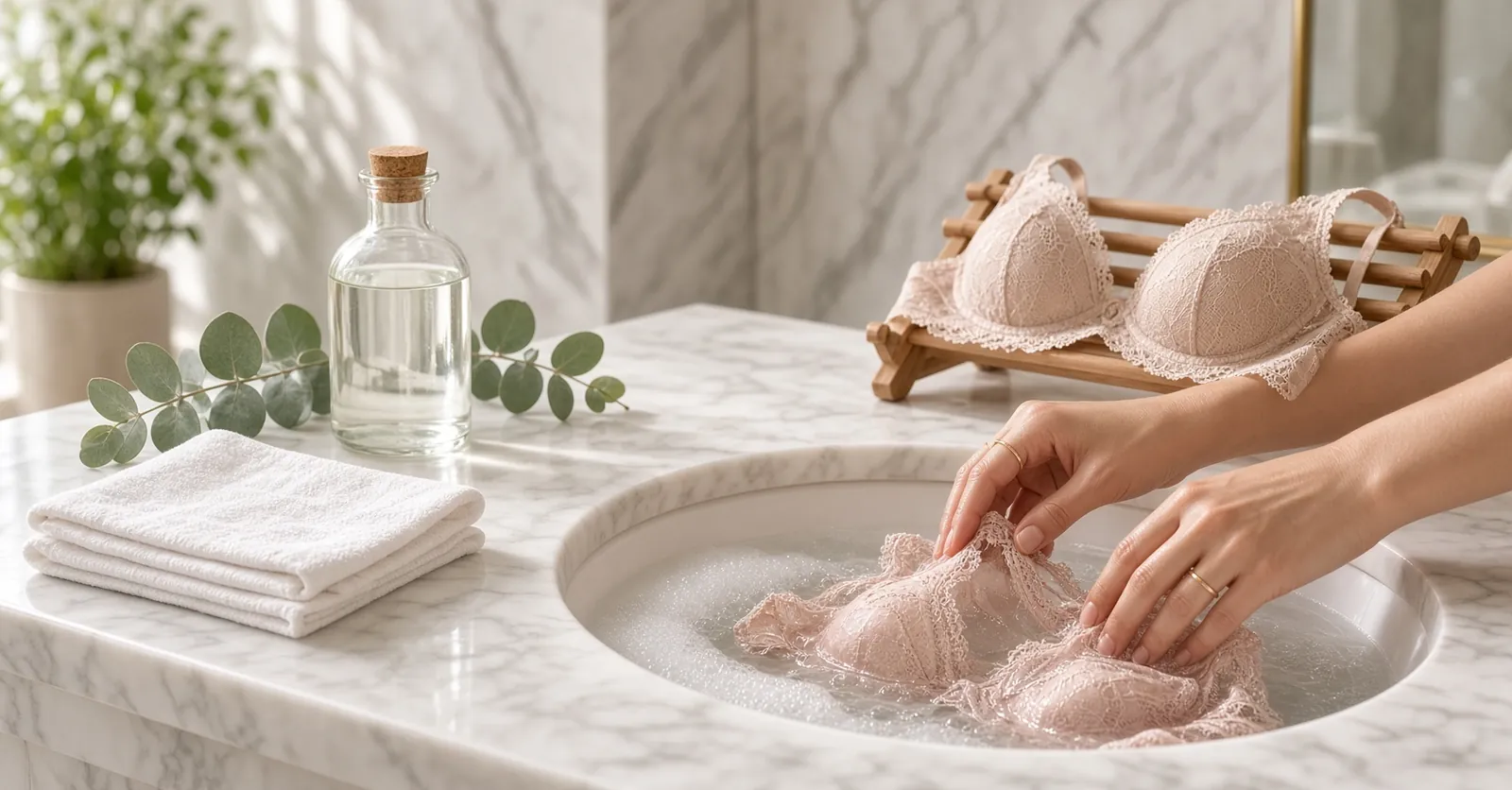
Make Every Bra Last Longer
Wash, dry, store and rotate the right way, and your favorite bras keep their shape and support for many more months.
Researched guides · Written by Chanchala, Amay Insights · Updated November 2026
Written by Chanchala, Amay Insights. LingerieMantra is reader-supported: when you buy through links on our site, we may earn a commission at no extra cost to you. Learn more.
A great bra is an investment, especially in full-bust and specialty sizes. Yet most bras wear out early for the same three reasons: hot water, the dryer and being worn every day. The elastic that keeps your band firm, spandex, is damaged by heat and needs rest between wears. Get the basics right and your bras stay supportive far longer.
The Five Golden Rules
Cool water
Hand wash in cool or lukewarm water. Heat breaks down elastic.
Gentle detergent
A small amount of mild, fragrance-free wash. Skip fabric softener.
No dryer, ever
Air-dry flat or hang by the center, never by the straps.
Rotate
Give each bra a day off so the elastic can recover.
Store flat
Nest molded cups; never fold one cup into the other.
How Often to Wash
| Bra | Wash after |
|---|---|
| Everyday bra | 2–3 wears |
| Sports bra | Every wear |
| Hot weather or heavy sweat | Every wear |
| Sleep bra or bralette | 2–3 wears |
| Strapless or occasion bra | After each event |
Washing and Drying
Storing and Traveling
Repairs, Replacing and Recycling
Care by Bra Type
| Bra type | Best care | Watch out for |
|---|---|---|
| Molded T-shirt bras | Hand wash or a structured bra bag; dry cups facing up | Dents and creases from folding |
| Lace bras and bralettes | Hand wash; fine mesh bag in the machine | Snags from hooks and zippers |
| Sports bras | Wash after every wear; soak for odor | Fabric softener blocks wicking |
| Strapless bras | Wipe silicone strips with mild soapy water | Lotion build-up kills the grip |
| White bras | Wash often; avoid chlorine bleach | Yellowing from sweat and deodorant |
| Nursing bras | Wash frequently; fasten clips | Milk residue souring |
| Silicone nipple covers | Rinse with mild soap, air-dry sticky side up | Lint and oils on the adhesive |
Fabric Matters Too
Cotton is soft and gentle but holds moisture, so dry it fully between wears. Nylon and polyester microfibers dry fast and hold their shape. Spandex, in almost every band, is the fiber that heat destroys first. Silk and fine lace prefer the gentlest hand wash. If your skin reacts to a bra, the detergent may be the cause: wash new bras once before wearing and choose fragrance-free formulas. Our bra fabrics guide and sensitive skin guide go deeper.
How Long Should a Bra Last?
A frequently worn everyday bra usually lasts six months to a year, and a sports bra a year or two at most. Replace a bra when the band feels loose on the tightest hook, the straps no longer hold their length, wires start to poke, or cups have creased or stretched. Rotating three or four everyday bras makes each one last noticeably longer.
Bra Care: FAQ
Can I machine wash my bras?
Yes, if you hook them closed, use a mesh lingerie bag and the delicate cycle in cold water. Hand washing is still gentler.
Why should I never put bras in the dryer?
Dryer heat damages spandex, so bands lose their grip, straps get wavy and molded cups can warp.
How should I store molded bras?
Lay them flat or stand them in a row with cups nested inside each other. Never fold one cup into the other.
What should I do with old bras?
Donate clean, gently used bras to bra nonprofits or shelters, and send worn-out ones to textile recycling.
Still unsure about your fit? Ask us.
Join our free Facebook group, Lingerie Mantra – Bra Fit Help, to ask fit questions and get friendly, practical answers.
Join the group →